
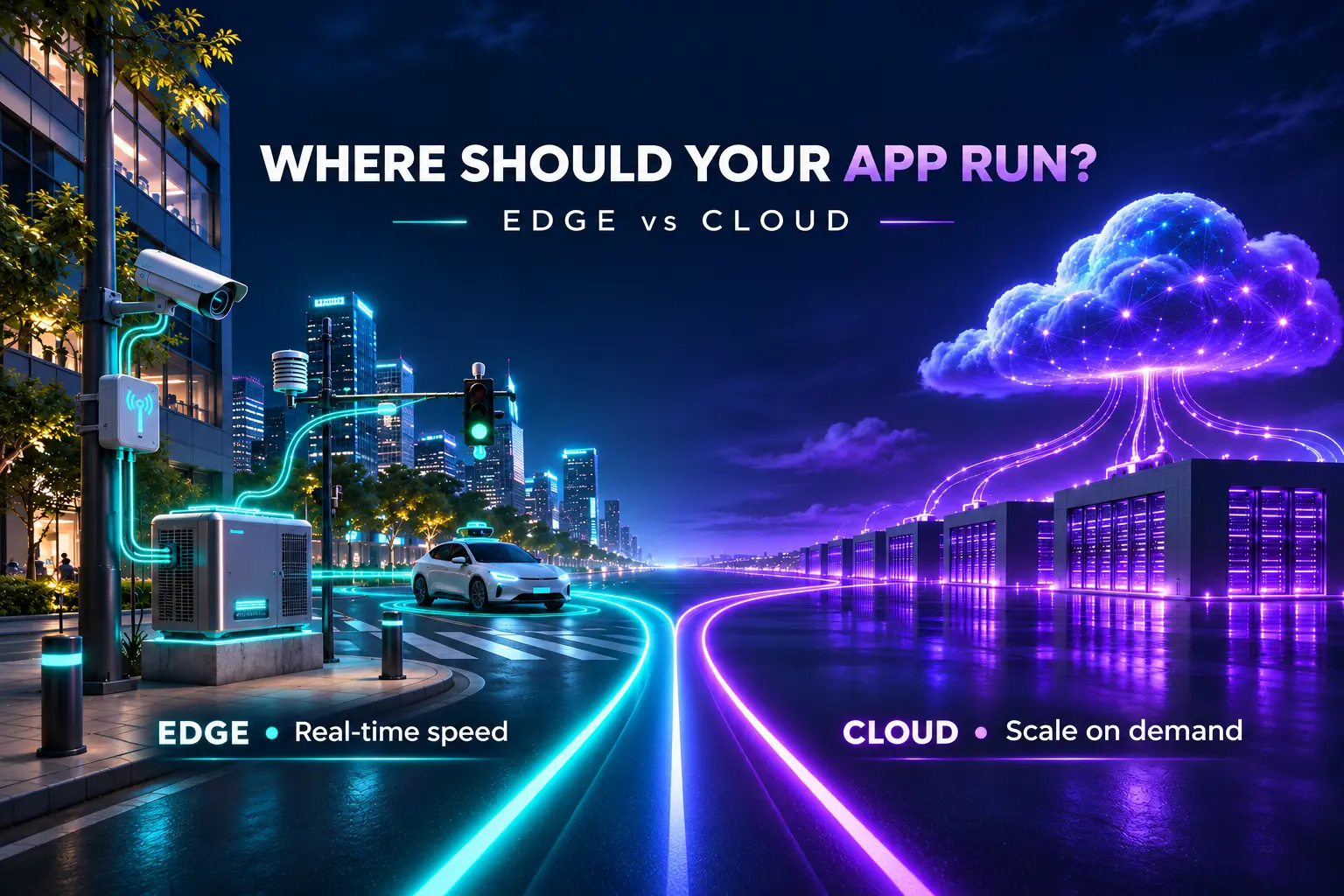
Edge Computing vs Cloud Computing: Where Should Modern Applications Run?
Modern applications are becoming more demanding. From real-time business platforms and IoT devices to AI-powered applications and online services, businesses need infrastructure that can process data quickly, maintain reliability, and support increasing workloads.
Traditionally, cloud computing has been the preferred choice for hosting applications and managing data. However, as applications require faster responses and real-time processing, edge computing is gaining attention.
This raises an important question: should modern applications run on cloud infrastructure, edge infrastructure, or a combination of both?
Understanding the differences between these approaches can help businesses make better infrastructure decisions.
- What Is Cloud Computing?
Cloud computing allows businesses to access computing resources such as servers, storage, databases, and networking through remote data centres over the internet.
Instead of maintaining physical infrastructure, businesses can use cloud platforms to host applications, store information, and manage workloads.
Cloud computing offers several advantages:
- Flexible infrastructure that can scale with business requirements.
- Centralised data storage and management.
- Access to computing resources from different locations.
- Reduced dependency on physical server infrastructure.
- Support for application development and deployment.
Cloud computing is particularly useful for business websites, CRM platforms, enterprise applications, online stores, and services that require centralised data management.
- What Is Edge Computing?
Edge computing is an approach where data is processed closer to the location where it is generated, rather than sending every request to a central cloud data centre.
For example, consider a smart manufacturing facility using sensors to monitor industrial equipment. Sending every sensor reading to a distant cloud server for processing may introduce delays.
With edge computing, certain processing activities can happen directly on local devices or nearby edge servers. This allows systems to respond faster to specific events.
Edge computing is particularly useful for:
- Industrial automation and smart manufacturing.
- Internet of Things (IoT) applications.
- Autonomous systems.
- Real-time monitoring platforms.
- Video analytics and surveillance systems.
Its primary advantage is reducing the distance data needs to travel before being processed.
- Understanding the Key Differences
Although both technologies provide computing capabilities, they differ in how and where workloads are processed.
Data Processing Location
Cloud computing processes workloads in centralised or distributed cloud data centres. Edge computing processes selected workloads closer to users, devices, or data sources.
Latency
Cloud applications may experience additional network delays when communicating with distant data centres. Edge computing can reduce these delays by processing information locally.
Data Management
Cloud computing supports centralised storage and large-scale data analysis. Edge computing can process and filter data locally before sending relevant information to the cloud.
Scalability
Cloud infrastructure offers flexible resource expansion through cloud platforms. Edge computing scalability depends on deploying and managing additional edge devices or locations.
Infrastructure Management
Cloud infrastructure is generally managed through centralised platforms. Edge environments may require managing multiple geographically distributed devices and systems.
- Why Application Latency Matters
Latency refers to the time taken for data to travel between systems and for a request to receive a response.
For applications such as online business platforms, a small delay may not create major problems. However, applications involving industrial machines, connected vehicles, or real-time monitoring may require extremely fast responses.
For example, an industrial monitoring system may need to detect abnormal machine behaviour and trigger an immediate local response.
Processing this information near the equipment can reduce dependency on network communication with distant servers.
However, not every application requires edge computing. The appropriate infrastructure depends on how sensitive the application is to delays.
- Cloud Computing Offers Better Centralised Resource Management
One of the biggest strengths of cloud computing is its ability to manage large workloads through centralised infrastructure.
Businesses can deploy applications, maintain databases, manage backups, and increase computing resources without building their own data centres.
For applications that require significant storage, centralised analytics, or access from multiple locations, cloud computing remains a practical solution.
It also simplifies infrastructure management compared with maintaining large numbers of individual edge devices.
- Edge Computing Helps Reduce Network Dependency
Applications that continuously generate large amounts of data can create significant network traffic.
Sending every data point to a central cloud environment may increase bandwidth consumption and introduce unnecessary communication delays.
Edge computing allows devices to process information locally and send only relevant results to central systems.
For example, a security camera network may analyse video footage locally and transmit alerts or selected recordings instead of continuously transferring all raw video data.
This can help reduce bandwidth requirements and improve response efficiency.
- Security and Data Privacy Considerations
Both cloud and edge computing introduce different security challenges.
Cloud environments require strong access controls, encryption, network protection, and proper data management practices.
Edge computing introduces additional challenges because devices and local servers may be distributed across multiple physical locations.
Each edge endpoint needs appropriate security configurations, software updates, access restrictions, and monitoring.
Businesses should also consider where sensitive information is processed and stored, particularly when applications handle personal or confidential data.
Neither approach is automatically more secure. Security depends on implementation, infrastructure design, and ongoing management.
- Why Hybrid Infrastructure Is Becoming Important
Modern businesses do not always need to choose between edge computing and cloud computing.
A hybrid approach combines the advantages of both technologies.
In this model, edge infrastructure handles time-sensitive processing, while cloud infrastructure manages centralised storage, advanced analytics, application management, and long-term data processing.
For example, a manufacturing company may use local edge systems to monitor production equipment while sending operational data to the cloud for performance analysis and reporting.
This approach allows businesses to balance processing speed, scalability, and centralised management.
- How Businesses Should Choose the Right Infrastructure
Selecting the right infrastructure requires understanding application requirements rather than simply following technology trends.
Businesses should evaluate:
- Application latency requirements: Does the application need immediate local responses?
- Data volume: How much information does the application generate?
- Network reliability: Can the application continue operating if internet connectivity is interrupted?
- Scalability: Will computing requirements increase as the business grows?
- Security requirements: Where should sensitive information be processed and stored?
- Infrastructure costs: What are the costs of deployment, maintenance, connectivity, and resource management?
Applications with centralised data requirements may benefit more from cloud computing, while applications requiring immediate local processing may benefit from edge infrastructure.
Conclusion
Edge computing and cloud computing serve different purposes in modern application infrastructure. Cloud computing provides scalable resources, centralised management, and flexible application hosting, while edge computing brings processing closer to the source of data to support faster responses and reduce network dependency.
For many modern applications, the most effective approach is not choosing one technology over the other but understanding how both can work together.
As digital applications become more advanced, businesses need infrastructure strategies that balance performance, security, scalability, and operational efficiency.
At SK Clouds, we help businesses build a reliable digital foundation through hosting solutions and infrastructure-focused services. Choosing the right hosting environment is an important step towards maintaining application performance and supporting future business growth.
Explore our solutions at www.skclouds.com
