
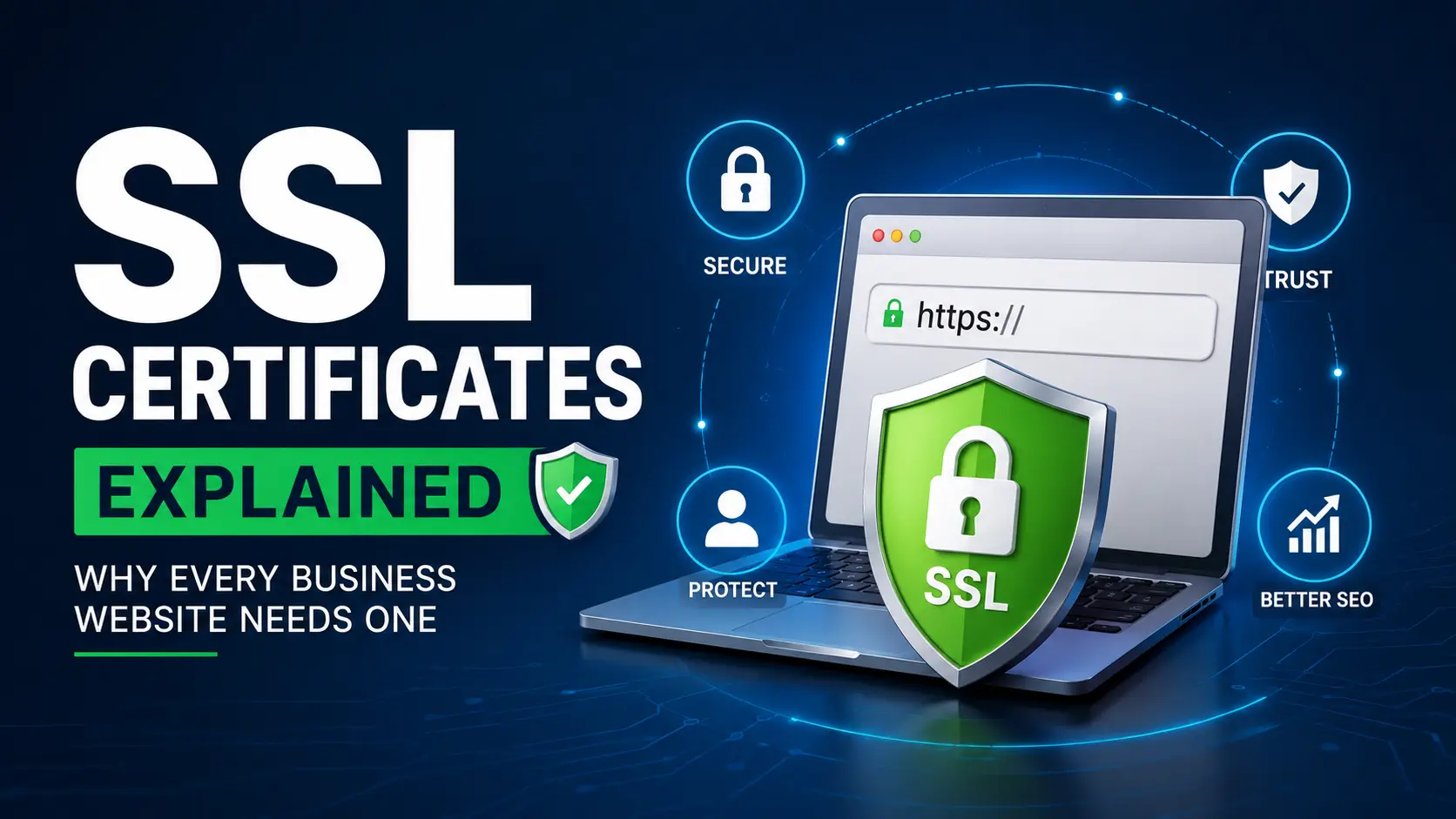
SSL Certificates Explained: Why Every Business Website Needs One
When customers visit your website, they expect their information to be protected.
Whether they are filling out a contact form, creating an account, or making a payment, the data they send should not be exposed to attackers. One of the most important technologies helping protect this information is an SSL certificate.
Today, SSL is no longer just something e-commerce websites need. It has become a basic requirement for almost every professional business website.
What Is an SSL Certificate?
SSL stands for Secure Sockets Layer. Although modern websites technically use the newer TLS protocol, the term “SSL certificate” is still commonly used.
An SSL certificate creates an encrypted connection between a visitor’s browser and your website server.
This means information transferred between them is protected from being easily intercepted or read by unauthorized users.
When SSL is active, your website normally uses:
HTTPS instead of HTTP
You will also usually see a secure connection indicator in the browser.
Why Does SSL Matter for Business Websites?
- It Protects Customer Information
Visitors may share information such as:
- Names
- Email addresses
- Phone numbers
- Login credentials
- Contact form details
- Payment information
Without encryption, sensitive information transmitted between the visitor and your website can be more vulnerable to interception.
SSL helps protect this data while it travels between the browser and your server.
- It Builds Customer Trust
People are becoming increasingly cautious about website security.
When visitors see that your website uses HTTPS, it gives them greater confidence that your business takes online security seriously.
On the other hand, browsers may warn users when a website does not use a secure connection.
Even if your website is legitimate, a security warning can make potential customers hesitate or leave.
For businesses, SSL is not only a technical feature—it contributes to credibility.
- It Is Essential for Online Payments
If your website accepts online payments, security becomes even more important.
Customers are unlikely to enter card or personal information on a website that appears unsecured.
SSL helps encrypt communication during transactions and forms an important part of maintaining a safer e-commerce environment.
It should be used alongside secure payment gateways and other appropriate security measures.
- HTTPS Can Support SEO
Search engines prefer secure web experiences, and HTTPS has long been considered one of the signals used when evaluating websites.
SSL alone will not push your website to the top of search results, but using HTTPS supports a secure, professional website and should be part of good SEO and technical website practices.
- It Protects Login and Form Data
SSL is not only important for websites that process payments.
If your website has:
- Admin login pages
- Customer portals
- Newsletter forms
- Contact forms
- Membership accounts
- Booking systems
then information is being transferred between users and your server.
Encrypting those connections helps reduce the risk of sensitive details being exposed during transmission.
What Happens If Your Website Does Not Have SSL?
An unsecured website can create several problems.
Visitors may encounter browser warnings indicating that the connection is not secure. This can reduce trust and cause people to leave before exploring your services.
Without SSL, transmitted information may also be more vulnerable to interception on insecure networks.
For a business, this can result in:
- Lower customer confidence
- Increased bounce rates
- Lost enquiries
- Reduced conversions
- A less professional online image
Security issues can quickly become business issues.
Are All SSL Certificates the Same?
There are several types of SSL certificates available.
Domain Validated Certificates
These verify that the certificate holder controls the domain.
They are commonly used for blogs, small business websites, and standard websites requiring HTTPS.
Organization Validated Certificates
These involve additional verification of the organization requesting the certificate.
They may be suitable for businesses that want an additional level of organizational validation.
Extended Validation Certificates
These involve a more detailed verification process and are sometimes used by organizations with stricter identity verification requirements.
There are also certificates designed to secure multiple domains or subdomains.
The right option depends on your website infrastructure and business requirements.
Does SSL Make Your Website Completely Secure?
No.
An SSL certificate is an important security layer, but it does not protect your website from every type of cyberattack.
Businesses should also consider:
- Strong passwords
- Regular software updates
- Website backups
- Malware protection
- Firewalls
- Secure hosting
- Access controls
- Regular security monitoring
Website security works best when multiple protective measures are used together.
How Can You Check If Your Website Has SSL?
Open your website and look at the address in your browser.
A secure website should begin with:
https://
Instead of:
http://
Most modern browsers also display information about the connection when you select the security icon near the address bar.
You should also ensure that your SSL certificate is valid and renewed before it expires.
Make Website Security a Business Priority
Your website is often one of the first places customers interact with your business.
A secure connection helps protect visitor data, strengthens trust, and creates a more professional online experience.
Whether you run a company website, online store, booking platform, or customer portal, SSL should be considered an essential part of your hosting and website security setup.
At SK Clouds, we help businesses build reliable hosting environments with the security foundations needed for a stronger online presence.
Is your business website properly secured?
Visit www.skclouds.com to explore hosting and web solutions designed for modern businesses.
